Hello everyone,
I want to begin this post by saying how extremely sorry I am for my absence. As much as I would like to use university as an excuse and how busy it has been keeping me for the past year and a half, I have to admit that this is mostly my fault. Hence I deeply apologize.
In order to prevent this situation from happening again as much as possible I have designed the following dynamic for the blog:
- Once a month (to the extent that it's possible) a publication will be made in relation to any of the topics stated in the description of this blog.
- Once a week a recommended reading will be published that follows the blog thematic. This has been decided with the purpose of giving visibility to content that has been developed by other people. Discussions about the content are more than welcomed.
Please know that any feedback is appreciated.
All the best,
Azul
Monday, February 12, 2018

Tuesday, August 9, 2016
Rome- The Law of the XII Tables
Hello everyone, once again, it is my pleasure to continue with more contributions to this blog of mine. Today I bring you a paper I wrote some time ago on one of my favorite subjects; Roman Law. This post focuses on the Law of the XII and how it radically changed Roman Law by setting religion and law as two separate fields which has enabled Roman Law to evolve from an archaic primitive system to the sophisticated legal framework that has shaped most of the western world. I hope you enjoy it, reviews are always welcome.
Why was the Law of the XII Tables of such importance in the process of the emancipation from the religious sphere of law as a secular order?
During the beginnings of the archaic period of Roman Law, the religious and the legal fields were closely connected. The link between the two was so strong that religious authorities, or pontiffs, possessed most of the legal information. Their function was not only to preserve this information but also to offer advice to those citizens facing a legal conflict. These services took place by a method of answers and questions called responsa which followed an oracle-like procedure. Its ritualistic nature can reflect to what extent religion and superstition shaped the Roman law at this stage. However, this situation would change, producing a separation of the legal and religious fields which would become later an important characteristic of the Roman law. Many factors may have contributed to this separation, nevertheless, the most important one initiated this process; the Law of the XII Tables.
The Law of the XII Tables was created in 450 BC as a result of the plebeians demanding a codification of the law. This law consisted of twelve bronze tables that were displayed in the Forum Romanum, (which was basically the political and civic heart of the city). On these tables the different rules regarding property law, family law...etc were written down for everyone to read. One of the most important factors of the Law of the XII Tables is that it was equally accessible for everybody, as its content was publicly displayed. This highly deviated from the way in which responsa worked, which was restricted to certain social classes or legal cases. Due to the accessibility, the Law of the XII Tables flourished among the Republic. As a consequence, the gradual but imminent decline of the pontiffs role in the legal sphere took place. However as the XII Tables were mostly oriented to plebeians, they were quite rudimentary and the only method that people had to learn them was to memorise them by heart. Only pontiffs were aware of the exceptions of the laws as well as the complexity of the Roman legal system and had access to the few legal documents of the time. This is why the religious sphere was able to protect and preserve some of its legal power for a while.
.
In conclusion, even though the Law of the XII Tables did not completely eliminate the relevance of religious authorities, it was successful enough to start the process of separation between the religious and the legal field. Romans started to depend less on the pontiffs’ advice and this gradually diminished their say concerning legal issues thus the Law of the XII Tables became a vital and important factor in the process the emancipation and the precursor of the well known ius (right/law) and fas (religion) one of the most outstanding achievements of Roman Law.
Wednesday, July 27, 2016
The Anglo-Zanzibar war; the shortest war in history.
It is my pleasure to publish the very first post of my history blog, I hope my readers enjoy it as much as I enjoyed writing it and doing the research. The first posts are always important, because as much as the style might develop and change over time, they always give the readers an insight of how the dynamics of the blog will work, so naturally, I can't help to feel excited about my first publication. I also believe that this marks a beginning to unleash the blog's potential but also to allow new friendships and knowledge to be created. This being said, I welcome you to my blog, wishing that any of the material I publish can be of use or, at least, of your entertainment. Any feedback is highly appreciated.
Today, I bring you to you one of the most curious war conflicts of history: the Anglo Zanzibar war, the shortest war that has ever existed (or at least the shortest that has been documented). This war took place during the XIXth century and for me, it is a clear display of the power that Imperialist Europe, specially the British Empire, had versus the rest of the colonized world back then.
First it is important to look at the insights of the different types of structures imposed by European Imperialism during the XVII-XIXth centuries. The territories under the European power could be classified into the following categories: colonies, protectorates and spheres of influence. Colonies could be either ruled directly or indirectly, meaning that they could have a ruler from an European power or they could have an appointed ruler native from the colony. On the other hand, in a protectorate, the local rulers were allowed to rule under the condition of being loyal and supportive of the European policies and measures. Protectorates were generally cheaper as they were granted autonomy and it was not necessary to carry out major changes to their political and economic structures. On top of that, the European powers did not need to exercise so much control on them. Lastly, spheres of influence are geographical or regional areas which are not owned by any country, however they function under the interest of a dominant power. This usually happens because the regional states are weak and they do not have other option than submitting to a strong external power, sometimes because they are coerced and sometimes in order to obtain protection and benefits by establishing trade relations with stronger states.
Today, I bring you to you one of the most curious war conflicts of history: the Anglo Zanzibar war, the shortest war that has ever existed (or at least the shortest that has been documented). This war took place during the XIXth century and for me, it is a clear display of the power that Imperialist Europe, specially the British Empire, had versus the rest of the colonized world back then.
First it is important to look at the insights of the different types of structures imposed by European Imperialism during the XVII-XIXth centuries. The territories under the European power could be classified into the following categories: colonies, protectorates and spheres of influence. Colonies could be either ruled directly or indirectly, meaning that they could have a ruler from an European power or they could have an appointed ruler native from the colony. On the other hand, in a protectorate, the local rulers were allowed to rule under the condition of being loyal and supportive of the European policies and measures. Protectorates were generally cheaper as they were granted autonomy and it was not necessary to carry out major changes to their political and economic structures. On top of that, the European powers did not need to exercise so much control on them. Lastly, spheres of influence are geographical or regional areas which are not owned by any country, however they function under the interest of a dominant power. This usually happens because the regional states are weak and they do not have other option than submitting to a strong external power, sometimes because they are coerced and sometimes in order to obtain protection and benefits by establishing trade relations with stronger states.
One of the kingdoms that benefited the most from Imperialism is Great Britain.
The British Empire had the control of colonies all over Africa, Middle East and North America. Many of them became protectorates years later. Great Britain also had strong spheres of influence all along Asia.
 |
| British dominions during the XIX Century- source "British Empire Geographical Dominions." N.p., n.d. Web. 3 Dec. 2015. |
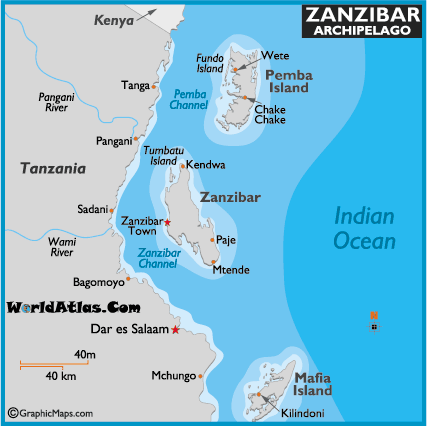
One of the English protectorates was the Zanzibar Islands, located in the eastern sea of Africa, very close to Madagascar.
Zanzibar Islands are famous because of the exotic spices which were exported to Europe such as cinnamon, cloves and nutmeg.
They were conquered during the late of the XIX century under the Anglo-German treaty of Heligoland-Zanzibar. It later gained its independence in 1963.
Nowadays this territory is a part of Mozambique, although its citizens are free to elect their own president.
The structure of the Zanzibar Islands politics during British colonialism was the following: the British government appointed a sultan -a ruler- to protect their interests and had a strong military presence in the protectorate to ensure that the sultan would be respected. The political figure of the sultan was much older though, as it was imposed during the 17th by the Arabs.
The Zanzibar Islands experimented coercion from the British Empire through high taxation and oppressive foreign politics, although it is fair to say that the limited political framework of the protectorate allowed it to enjoy certain stability. Nevertheless, these factors contributed on the long run to create tension, being the fact that the Zanzibar people were not free to choose their own leader, which was appointed by the British Empire instead, one of the main contributors to this situation. Soon, the prospect of a violent civil reaction became imminent.
In 1896, the Sultan Hamad, who until then had peacefully ruled in spite of the general tension, died (although it is believed that he was assassinated due to the sudden and aggressive nature of his death). As it was customary, the next sultan would be appointed, however, contrary to the procedure, Hamad’s cousin, Khalid Bin Barghash proclaimed himself the new sultan of the Zanzibar Islands. This was regarded by the English as a rebel act of treason to the British Crown.
The British Empire immediately resorted to a diplomatic approach and talks began; Khalid was asked to step out of the political power, however, not only he rejected this petition but also gathered an army and accumulated forces around the Zanzibar palace.
As a result to Khalid's resolution to retain the power, the British gathered up to four warships around the islands and gave him an ultimatum with a deadline that ended the August 26th at 9am which he deliberately ignored. The British navy then began bombarding the Zanzibar palace.
By 9:02, most of Khalid’s forces were put down and finally at 9:40 he surrendered. The war lasted a total of 40 minutes, breaking the record of the shortest war in history.
Soon after the war was over, the British government appointed a new governor, the sultan, Hamud bin Muhammed while Khalid managed to escape to a German consulate nearby. The victims of the war were over 500 wounded or killed men on Khalid’s side and an injured English officer who was later capable to recover. The Zanzibar palace, the center of the protectorate political life, was left in ruins.
 |
| Zanzibar Palace after the war- source "The Shortest War in History." Historic UK. Ed. Ben Johnson. N.p., n.d. Web. 02 Dec. 2015.
Bibliography
|
Subscribe to:
Posts (Atom)